
I have a reputation for breaking the rules. Though raised Church of England at boarding school from the age of 11 and in Chapel twice a week, it is unusual for me to make this kind of wish on my birthday ~ to find several churches in the East Riding of Yorkshire and chart a route between them, hunting their Norman apses, arches and fronts. “Are you my Dad?” an old friend quipped when I told him about my plan, “Because that sounds like his perfect afternoon”. I laughed. I quite like that I am a 33-year-old who did something so different on her birthday.

We started the day off ~ with my mother, my sister Cha and her boyfriend, Luke ~ at The Bay Horse in Market Weighton. We had come here on the recommendation from a friend and for their excellent fish menu. It was precisely what we needed ~ a boujie market town pub with a solid, well-decorated interior and locals laughing and having their first pint of the weekend in the bar. My mum had the trout whilst I tucked into a wild venison burger and a non-alcoholic beer. Smoking a cigarette in the beer garden outside, I scented the wind and noticed the sun bathing the patio slabs in white light, realising it was the first truly warm day of the year, and there was promise in the air.
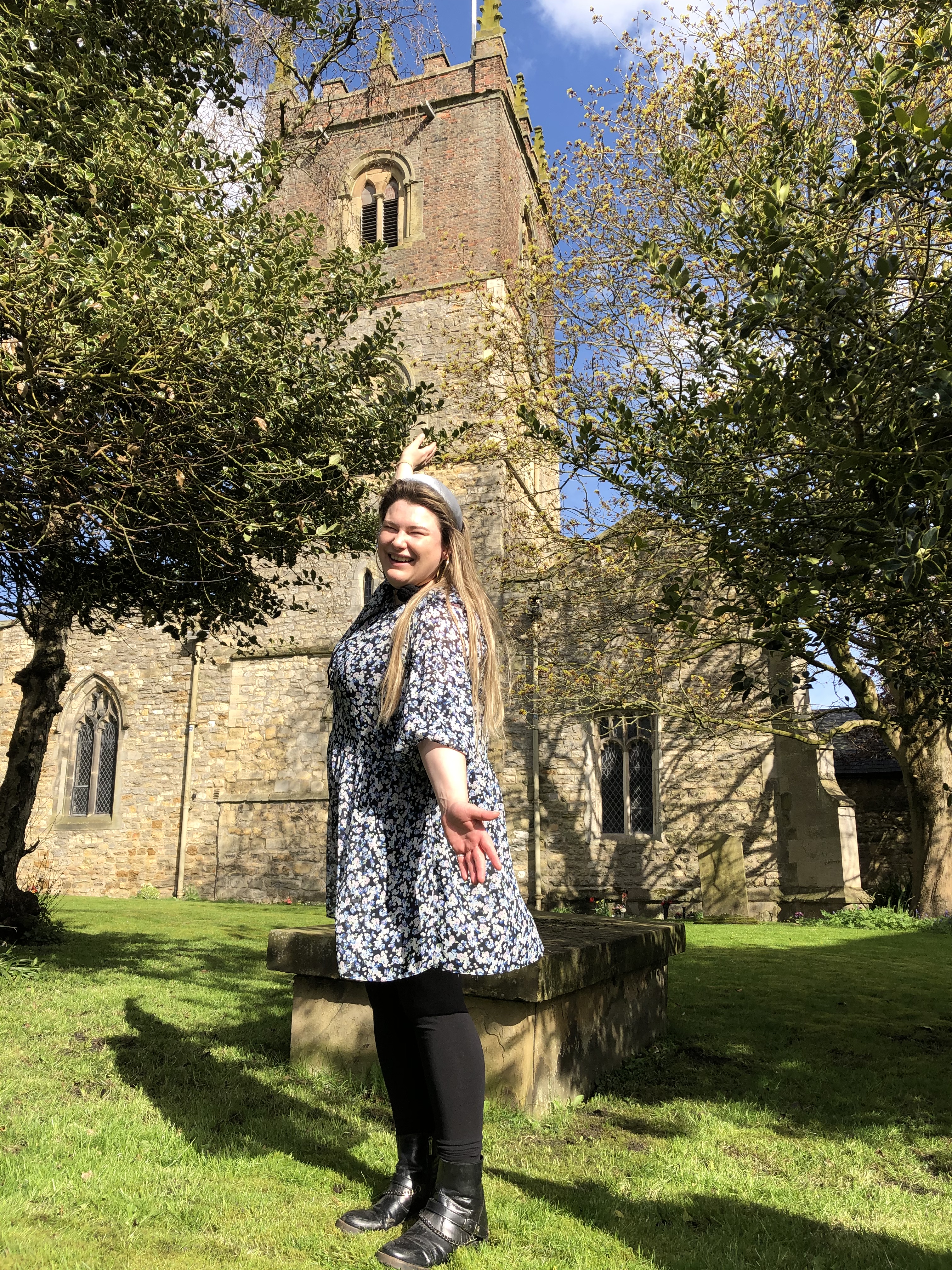
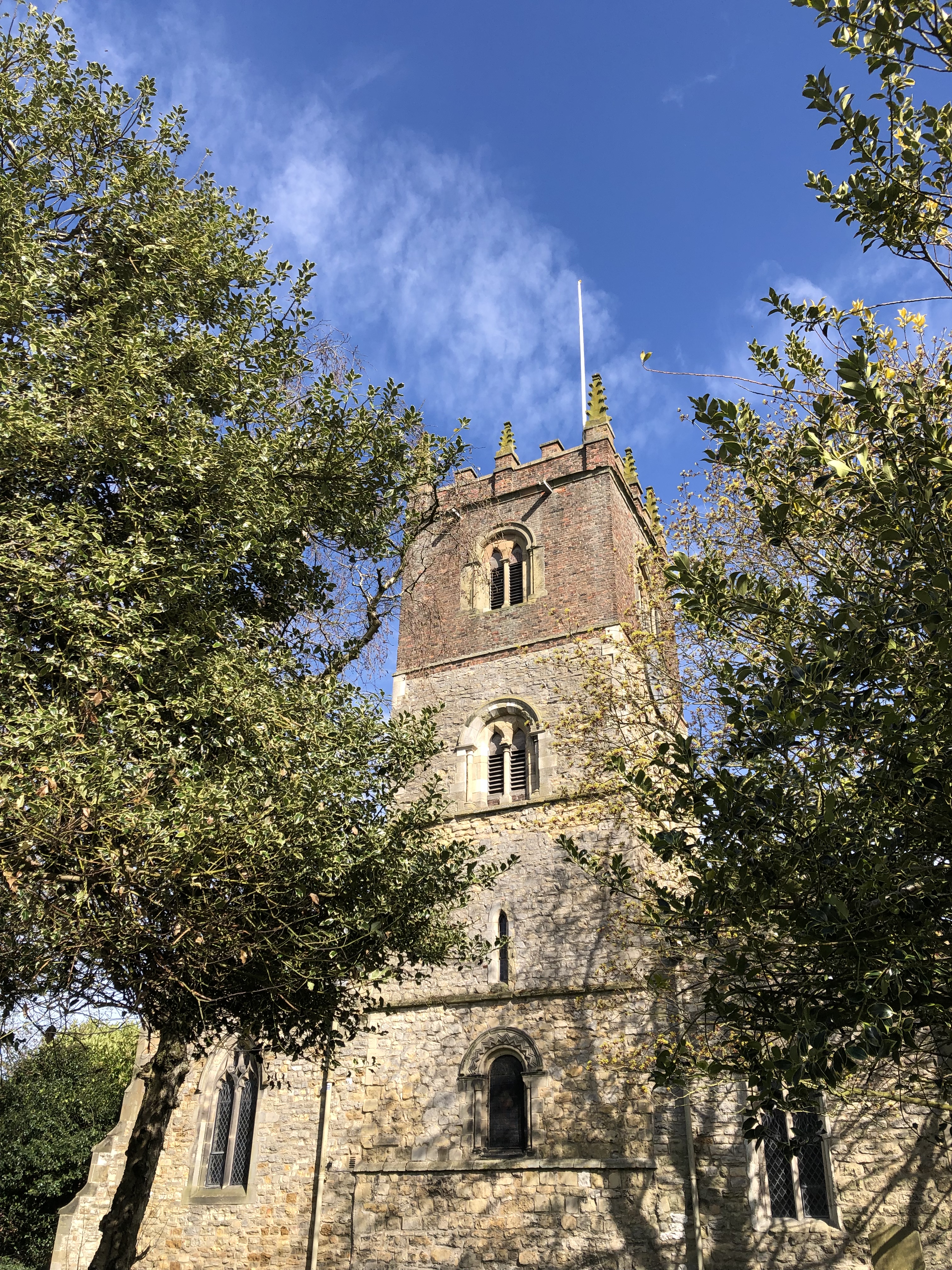
After lunch, we wandered up the road to All Saints, Market Weighton’s parish church. The council website tells me it is the oldest building in the town, being Grade 1 listed, with parts of the tower dating back to Norman times. This is, in fact, what drew me here. Some years ago, driving back from a summer dog walk in Bridlington, my mum and I sat in comfortable silence, I spotted a brown heritage sign stating ’13th Century Norman Church’, and I thought, “Wow, I’d love to see that one day”. So this year, I decided to see a few as my birthday treat.

Ordered, richly carved and well-tended, All Saints is situated on a slight rise in the land and backs onto the most idyllic hidden country lanes. On a sunny day in spring, she welcomed us with sunlight pouring through the colourful stained glass windows, and we felt grateful and happy we got to meet her in such a mood. The interior was dappled and greened by the trees’ leaves outside which waved in the breeze, throwing shadows and colour onto the walls. She feels very much a part of the countryside around her, hugged by greenery. If you visit here yourself, I recommend following the road called The Archway around the back of the church, leading onto St Helen’s Square for a short jaunt past some quaint Georgian townhouses and a picturesque view of All Saints from behind.

If you, like us, are in search of this church’s ancient components, look out for the font inside (which dates back to the Saxon period), the top slab of a medieval grave standing upright behind the pulpit, and the lower part of the tower, which is Norman.
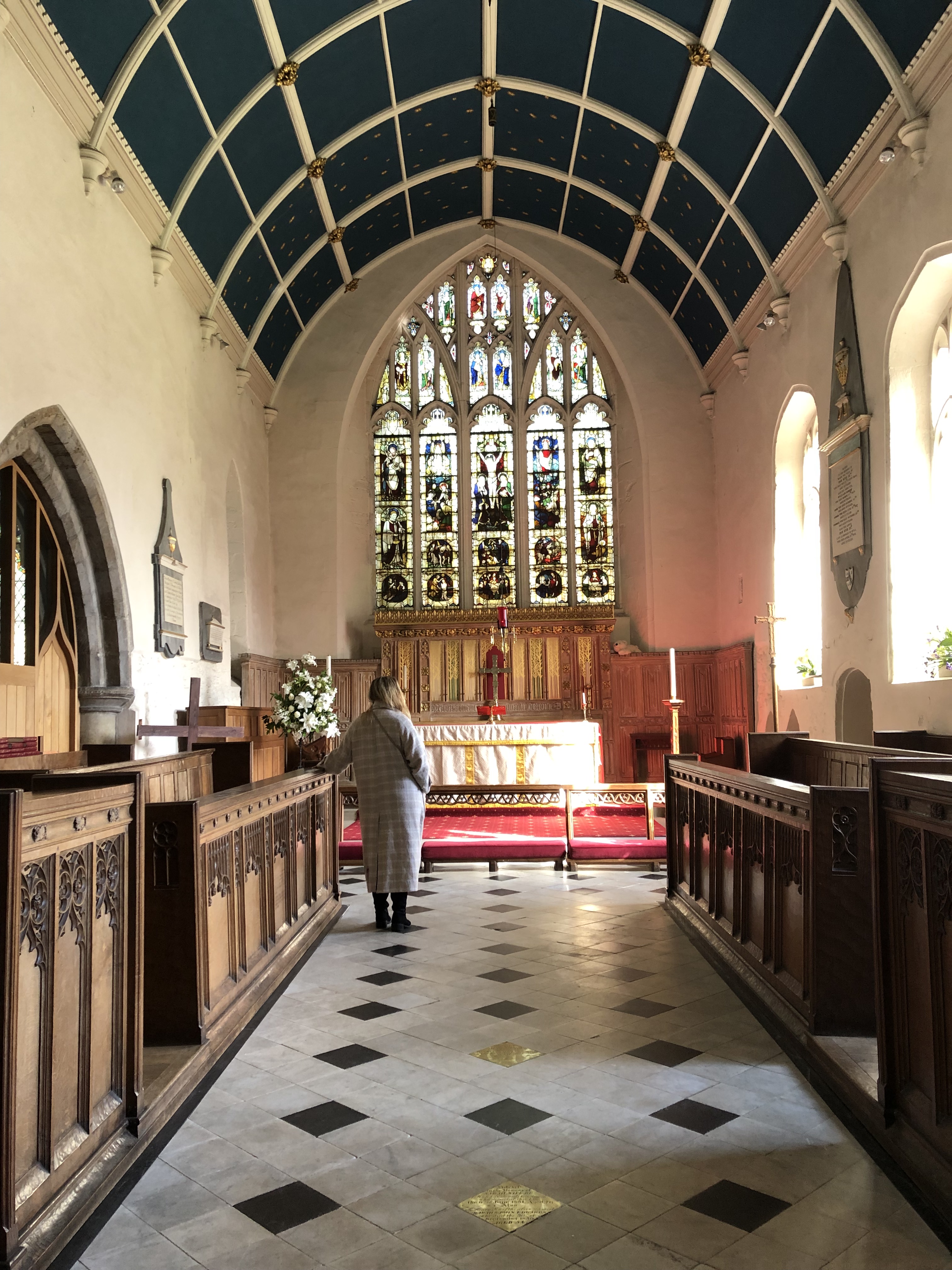
I took this picture of my sister quietly surveying All Saints’ altar and standing among the choir pews, these being the largest we saw on our tour. I watched her run her hand along the ornate wood, smoothed by hundreds of years of singers’ hands and hymnals. A familiar feeling to my sister and me, having both sung in the Chapel Choir when we were young. This church has a pleasant, well-cared-for energy and it was Cha’s favourite from the day when we sat down to discuss later on.
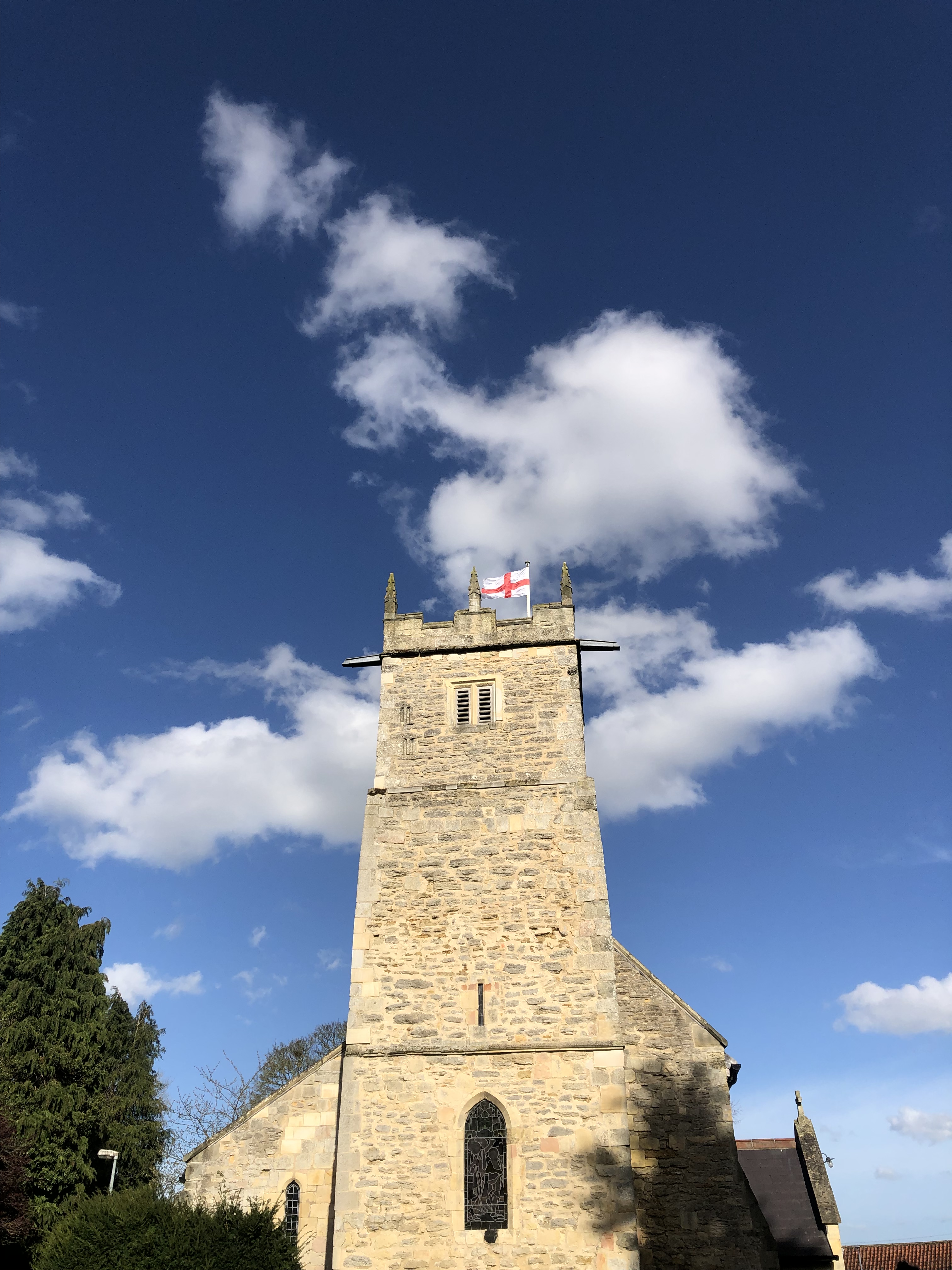
Next, we were on to a pretty Yorkshire village just outside of Market Weighton called Shiptonthorpe. This charming little church had a very different character to All Saints. It was slightly more eccentric and slightly less worldly than its neighbour, reminding me of the Jane Austen novel Pride and Prejudice and her characters, the Bennet family, who were sent all aflutter when the overly-genteel Bingleys came to town. With the English flag flying overhead and its ancient 15th-century tower and arrowslit, it felt as though we had stumbled across a fortress to be defended from invading troops. When we got closer, we found something unfamiliar and untamed in its character and we didn’t stay long, feeling less welcome here than in Market Weighton, and this intrigued me.
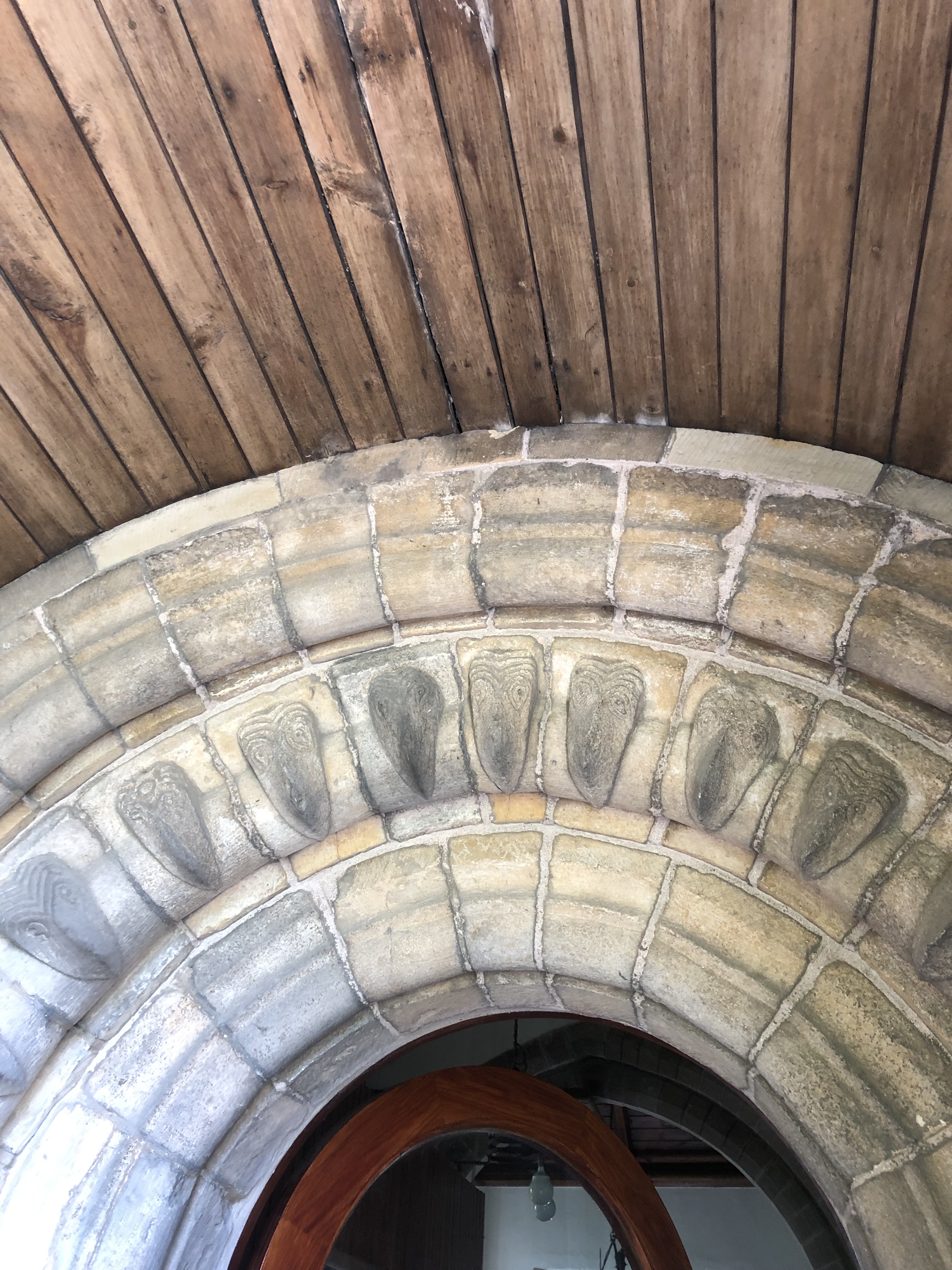
This thick arch over the main entrance is carved with what looked like the remnants of stone faces, and there is a figure etched into the porch gable, depicted in a long gown, with an oversized round head, holding a crooked staff.
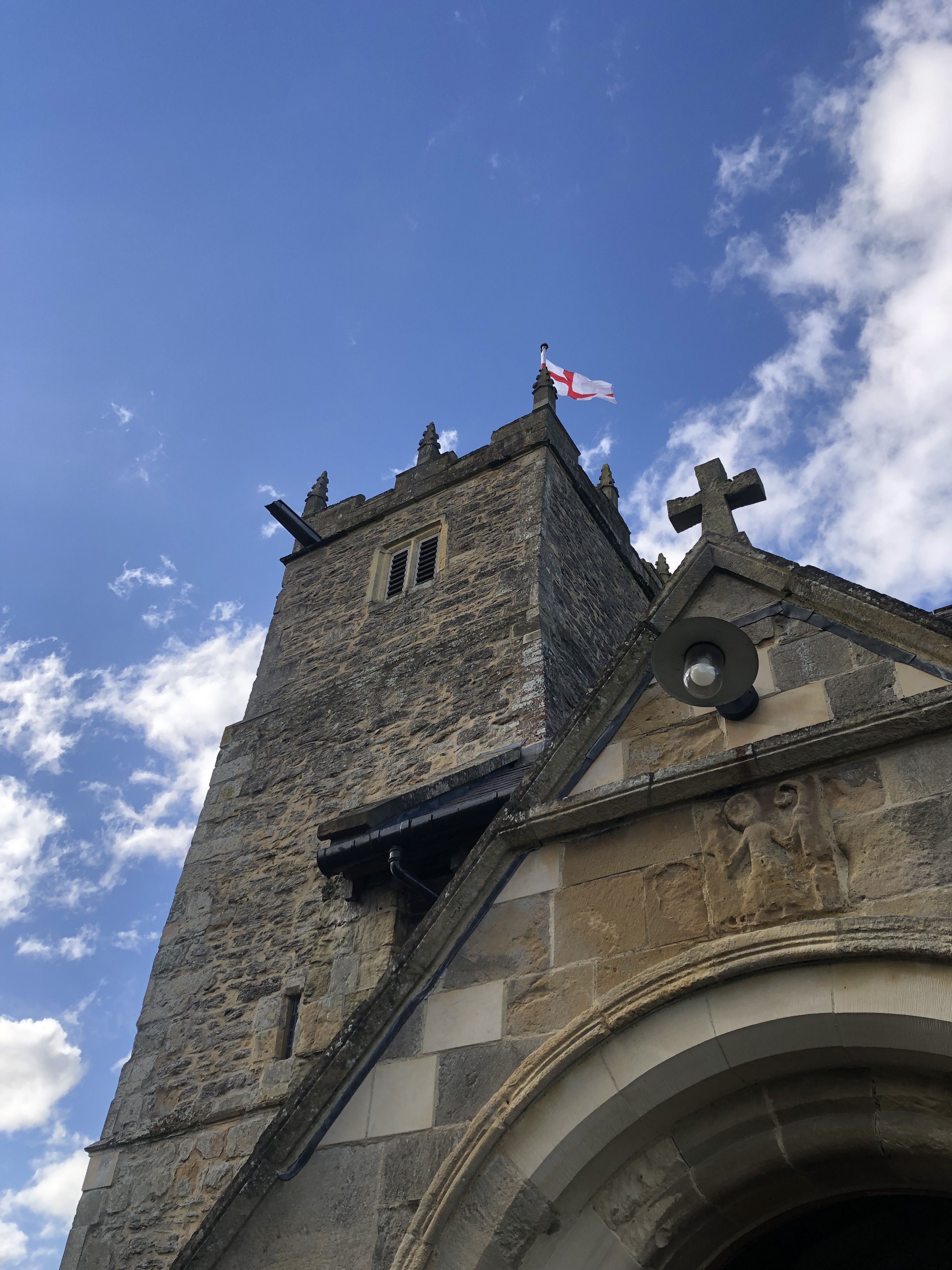
These features are Romanesque (meaning: ‘in the manner of the Romans’), used to describe the dominant architecture throughout Europe during the medieval period when the first surviving parts of this church were built. A little digging told me that the faces above the arch are correctly called ‘beakheads’, but what was a grotesque bird’s face doing carved into a church, a Christian sacred space? Today, scholars generally agree that grotesques and gargoyles were intended to ward off evil spirits and protect those inside the church. But to me, these beakheads and the unsettling figure above the porch gable were natural progressions from the fantastical figures that were very much part of pagan religion during Anglo-Saxon times before England was fully Christianised, evidence for which we found in the next church…

Nunburnholme is a quiet, unassuming church that we reached by driving along single-file country lanes that interlaced between the fields in the first flushes of spring and gave us the most breathtaking view out over the great, flat and green expanse that makes up the Vale of York. As we crested the rise from Londesborough Hill, I wrote on my phone, “But these country lanes are the pathways to my childhood. These are my home”. And this is true. For my whole young life, my mother drove these pot-holed roads in Sussex and then in Yorkshire, past fluffy sheep with tugging lambs, beneath mountains of white clouds, rivers reflected in the waters of the bridges we drove over in a bright, fresh blue sky. England waking up to the year as another one passed by. The steadiness and reliability of the land around me, turning patiently and predictably with the seasons ~ regardless of school grades, family tempests and adolescent changes to my body ~ is and was one of the greatest gifts I could ever be given. This trip was a reminder of this. It was a subtle calling: “This is who you are. This is what you need in times to come, for this is who you were and who you have always been”.

Churches have drawn me for their tranquillity and history ever since I can remember, from childhood Christmas carol concerts in the village I was brought up in, to the Église Saint-Jean de Montmartre, an art nouveau church with impressive stained glass windows where I would go for refuge and to calm my anxiety when I lived in Paris many years ago.
Trepidatiously and quietly, we turned the heavy iron handle of the door of St James’ to see if it would swing open. When it did, the singular smell and experience of a familiarly gloomy and dusty interior, with vaulted stone arches and a beautiful solemnity to the stained glass was revealed. Immediately, I felt peace and comfort, and I could feel myself wanting to slide into a wooden ancient pew with creaking seat and bow my head in prayer, as I used to do at school. “Can you smell that?”, I breathed, taking a deep breath in. “Yeah, it’s damp”, my sister said matter-of-factly. I laughed. It was.
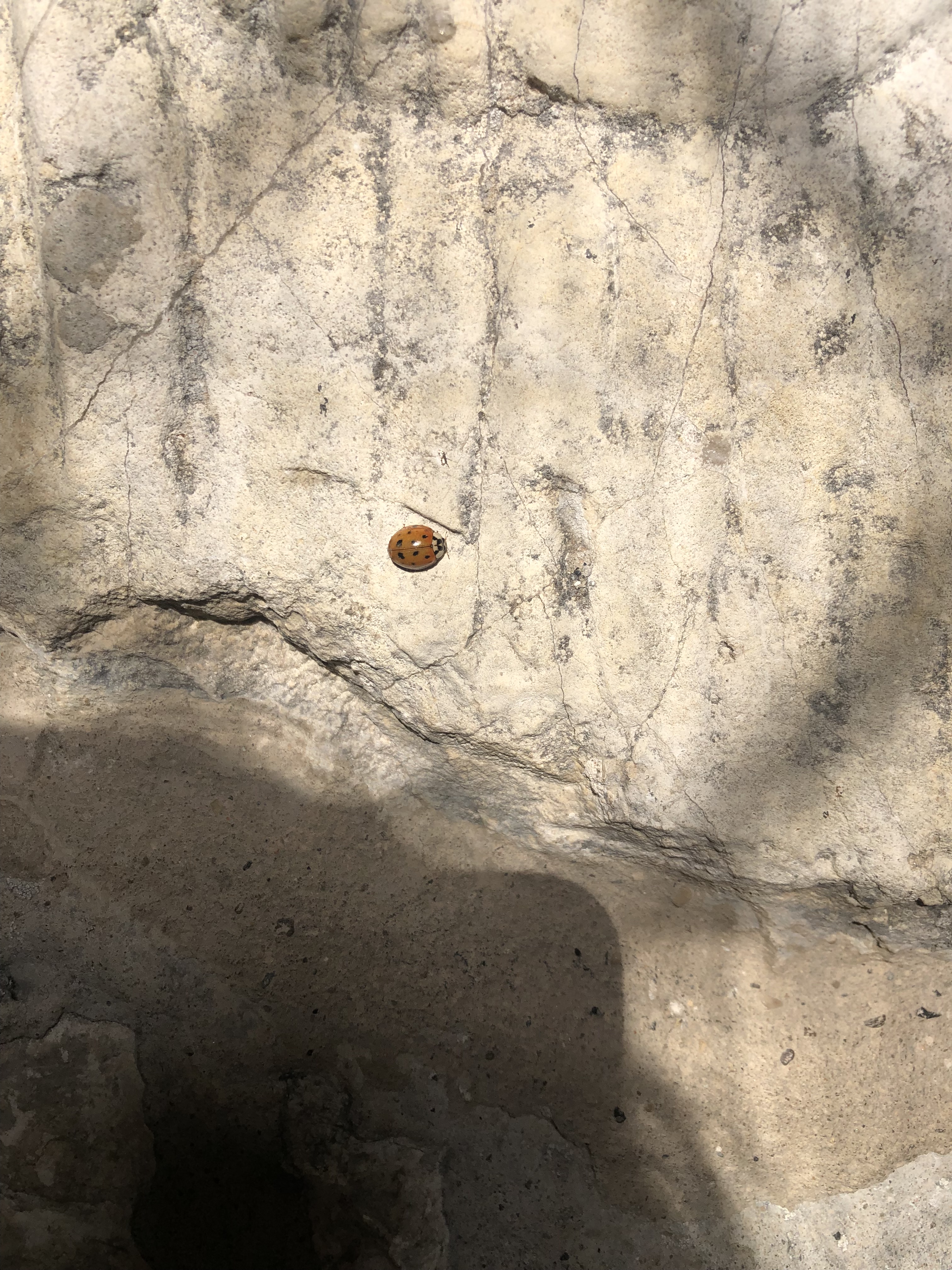
Inside St James at Nunburnholme is a great upright stone with four sides. Its energy is so powerful that I didn’t feel right taking a picture of its strange, disquieting carvings, etched in a kind of mural around its cuboid flanks. Instead, I found this spotted ladybird bathing in the weak sunlight thrown through the window the stone is placed beneath. Ladybirds always appear when something important in my life comes to pass. The National Churches Trust tells us, “With its ancient stone cross carved by Anglo-Saxon and Viking sculptors, its Norman arch and medieval font and stained glass windows, the church spans a millennium; cross the threshold and feel yourself stepping back in time”. This explained my sense of strong emotional connection to this site. Encapsulated within its walls were centuries of history and the successive stamps of my ancestors’ pious hands. Writing this now with the depth of stories the stone offers tantalisingly close, I can’t help thinking it would make an incredible topic for a dissertation or thesis if any of my readers are looking for one.
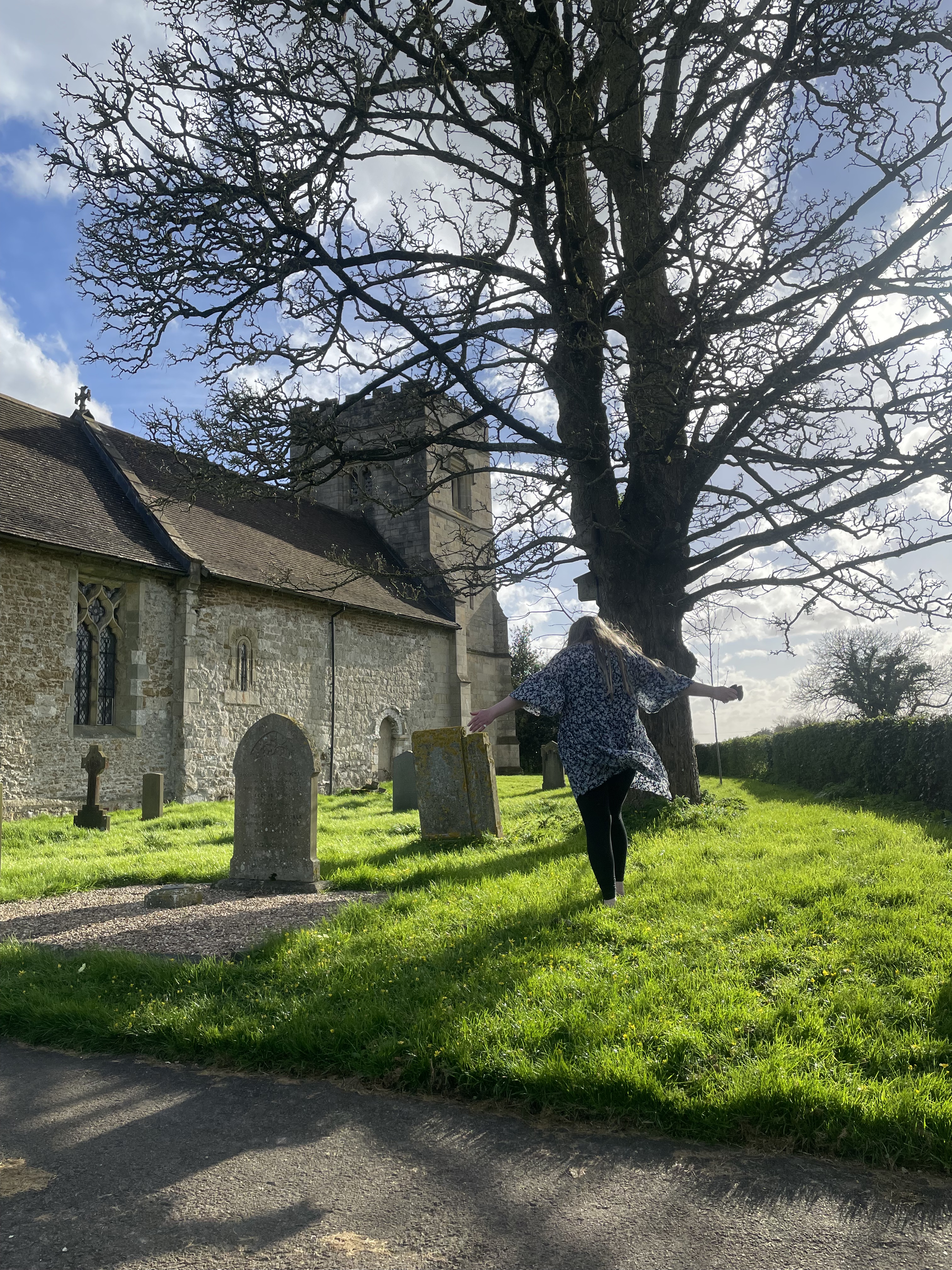
Outside, we walked around the church and through the graveyard, careful of our steps. But the grass was so thick and lush that my instinct told me there were no spiky weeds beneath my feet. So I found a bench on the church grounds and sat down. “Just give me a moment”, I said to my mum. I stripped off my boots and socks ~ my skin so pale and white it looked translucent in the early April sunlight ~ and placed my soles upon the earth. It was bouncy, soft and cool. I spread out my arms and felt genuine joy and release. A smile spread across my face.
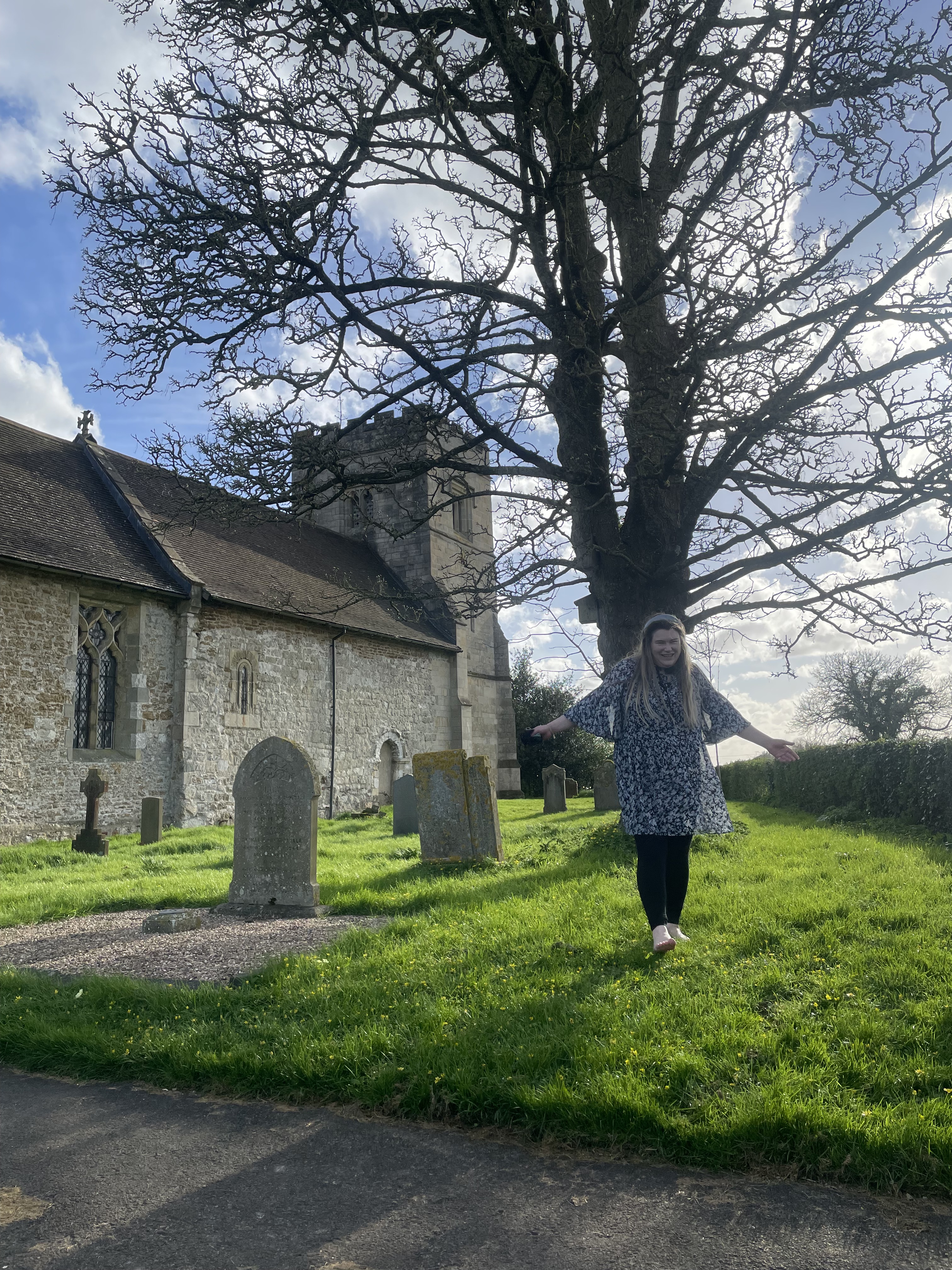
The Reiki energy worker I listen to almost every night on YouTube says that just 10 minutes with our bare feet on the Earth every day will make us feel better. From how this affected me, just for the brief period I walked through the grass, I can attest to this being true. Perhaps this is something you would like to do.
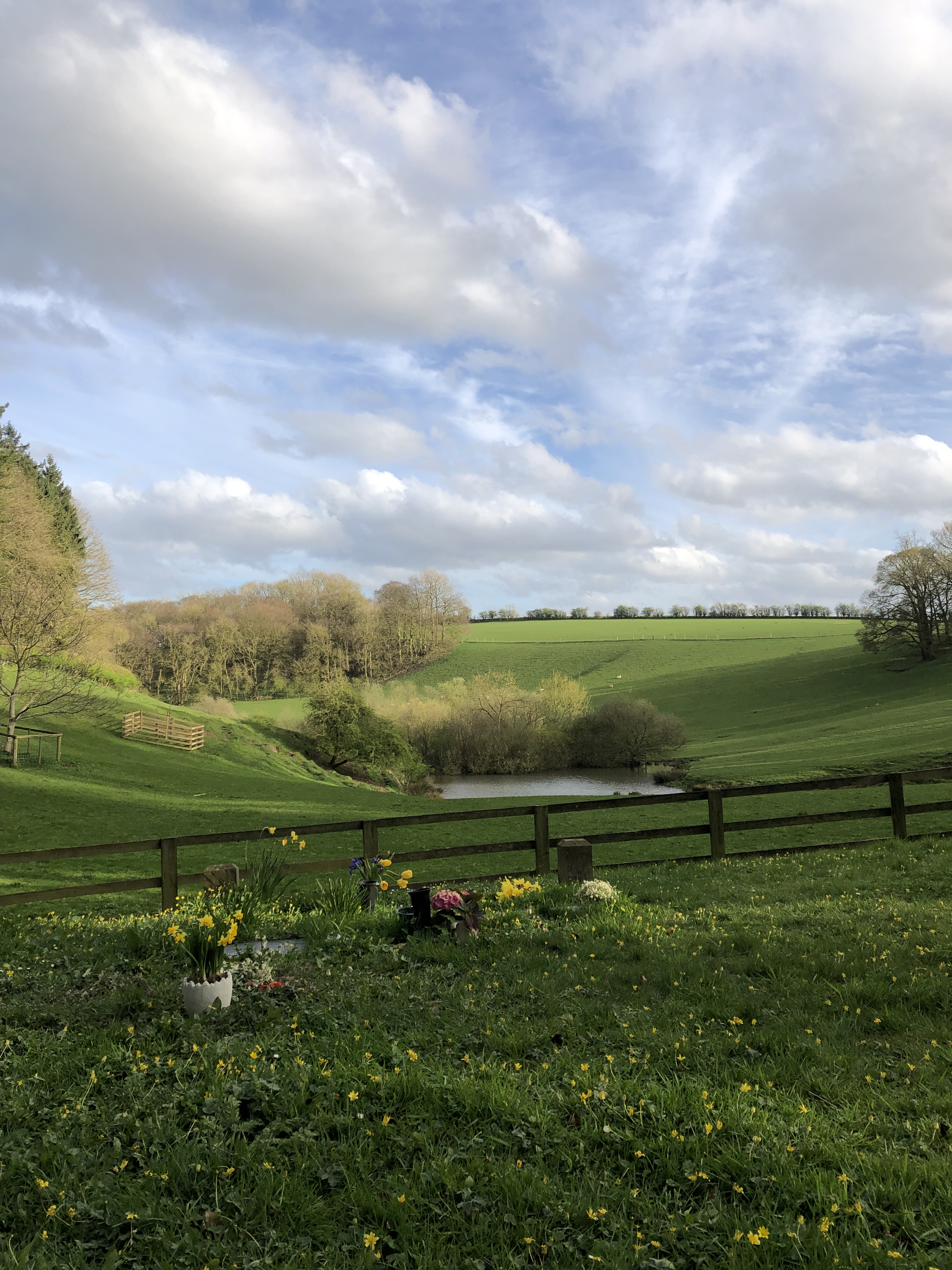
Our final church was St Ethelburga’s at Givendale. We parked up the hill and walked down the muddy track towards her, having read on the Pocklington Group of Churches that her font is Saxon and arch Norman. We were excited by the view and I sensed that we all already felt that we had come across a very special sanctuary. As I looked down upon the valley from the church garden, I reflected that I couldn’t recall ever seeing such a beautiful setting for a sacred building in all my life. It was quiet and secluded, save for the lilting call of the birdsong in the trees around us, and the bursts of yellow daffodils and pink and white flowers planted in the gardens, which swept down towards a peaceful pool of water nestled in the grazing pasture below. It was easy to feel God here. And it was easy to see, with all honesty, that here is what people mean when they call this Earth a piece of ‘God’s Creation’.

Inside, villagers and congregation members had decorated the altar with spring blooms, and the sweet scent of daffodils and powder-white viburnum filled our lungs and wafted serenity through the soothing air.

As we walked around the church, my sister’s boyfriend Luke, who is a professional photographer, noticed me standing in this ray of fading sunlight and snapped a picture. I am grateful and proud that I got to visit here. I am proud of our old churches, spanning centuries of history. I am grateful for all those who tend and care for them and preserve them for generations to come. And I am a little proud and grateful for myself, too. I am proud that even though my body has changed and holds within its folds many unprocessed emotions, I can still throw on a floral dress and a headband, and my comfy, stompy boots and super soft leggings, and feel like myself again. I am grateful I have been given another chance to rebirth, to grow, and to see what there is in this life that I can plant, to see what seeds there are that I can sow. There is so much more for us to see, so much more for us to know. And yet…
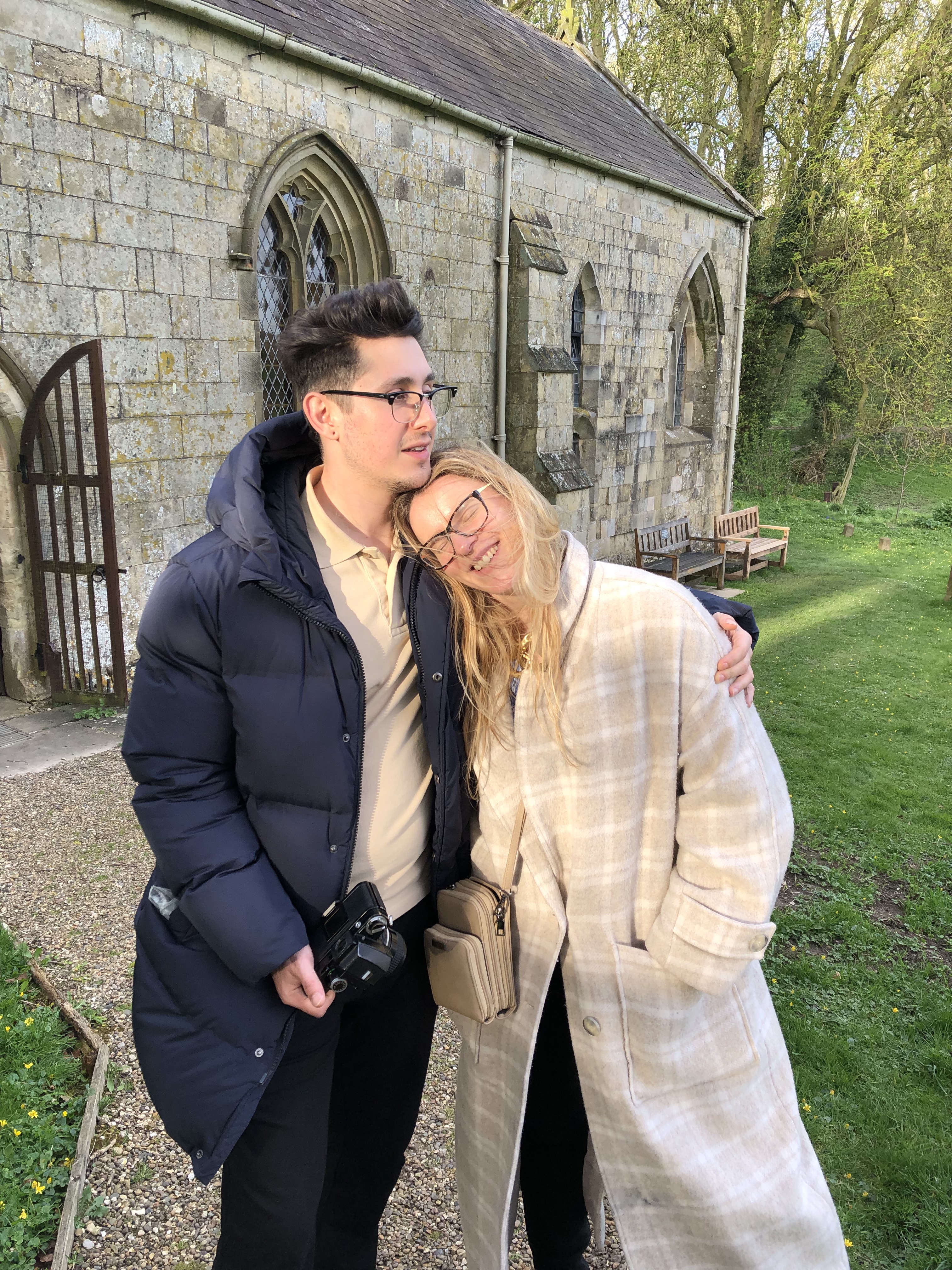
Some lessons I have learned are forever. Like how some experiences are best shared. Like how, for the right people, we are never too much. Like how we need each other ~ for comfort, for reflection and for human, therapeutic touch. And how, for all of our flaws, we can be a sympathetic judge. Be kind to yourself, always…
In Love&Light, FS XOX
 Mindfully Stylish 🌷
Leave a comment